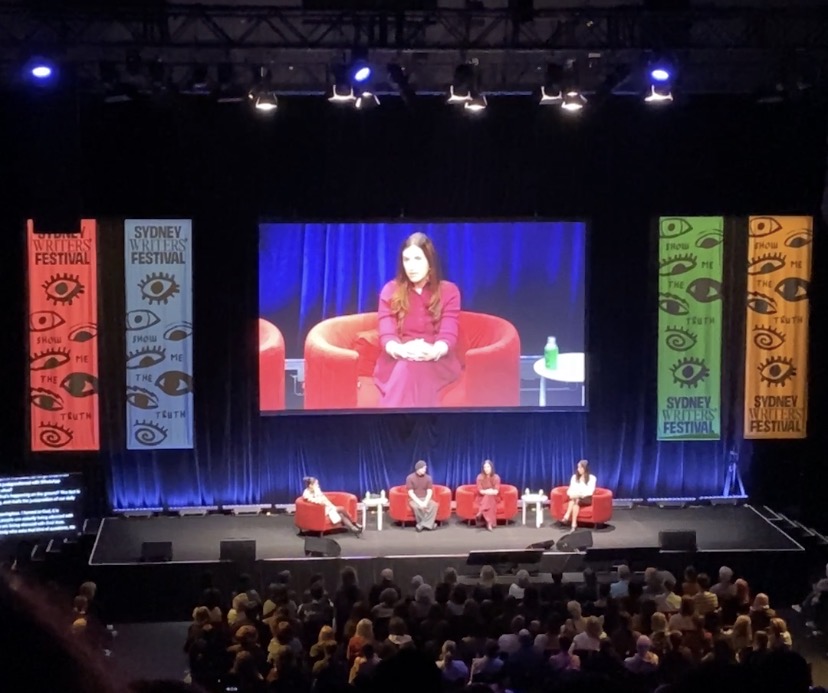
“At difficult times, it is the courage of women that gave me strength.” This powerful sentiment, echoed by Antoinette Lattouf, perfectly captured the spirit of Silenced – a sold-out session at the Sydney Writers’ Festival that was as urgent as it was deeply moving.
The panel brought together three formidable authors who have recently released outspoken new books exploring censorship, cancelling, and resilience:
- Randa Abdel-Fattah (Discipline)
- Antoinette Lattouf (Women Who Win)
- Michael Mohammed Ahmad (Bugger)
The one-hour session, facilitated by Jan Fran, flew by entirely too quickly. I left wishing it had been longer, as each panelist was only able to briefly touch upon the immense complexities of what it means to speak up against the establishment, the steep personal and professional price they’ve paid, and why- despite it all – they cannot stop.
Stripping Humanity and Weaponising Words
The discussion pulled no punches regarding the mainstream media’s dehumanising language when reporting on Palestinian and Lebanese lives. Examples shared were chilling: from The Economist passively writing that “death descended” onto ten Palestinians, to media outlets absurdly referring to Hind Rajab – a five-year-old child—as a “5-year-old woman.”
The panel brilliantly critiqued how the government seems utterly obsessed with legislating against words, symbols, and slogans, while remaining completely stagnant on taking actual, meaningful action. Abdel-Fattah spoke powerfully on the sheer violence of this colonial framework, noting how censorship has extended to BDS, clothing, symbols, and even grief itself. We are actively being told who we are allowed to grieve, and who we are not.
The True Cost of Silence
The conversation dug deep into the layers of censorship, from institutional suppression to self-censorship and policing within communities. The overarching message was clear: expressing solidarity publicly carries a heavy price, but the cost of silence is far worse.
But perhaps the most challenging call to action was this: It is simply not good enough to just be a “good person.” Private goodness means nothing if it stays quiet. We need to actually use that goodness for active good, for solidarity, and for resistance.
This isn’t just about individual authors; it is a collective crisis. We need to speak up for the Randas, the Antoinettes, and the Dr. Jumana Bayehs of the world. Because if we don’t stand up for them when they are targeted, eventually, they will come for you. Silencing book critics, academics, and writers ultimately means silencing readers. It imports a culture of fear that dictates what we are allowed to think.
Final Thoughts
Despite the heavy and confronting themes, the session didn’t leave the audience in despair. Amidst the critique of a punitive system, the panelists reminded us of what fuels the resistance: hope and love. It was an unforgettable, vital hour that reminded everyone in the room why we must refuse to be quiet.
 Families for Palestine
Leave a comment